

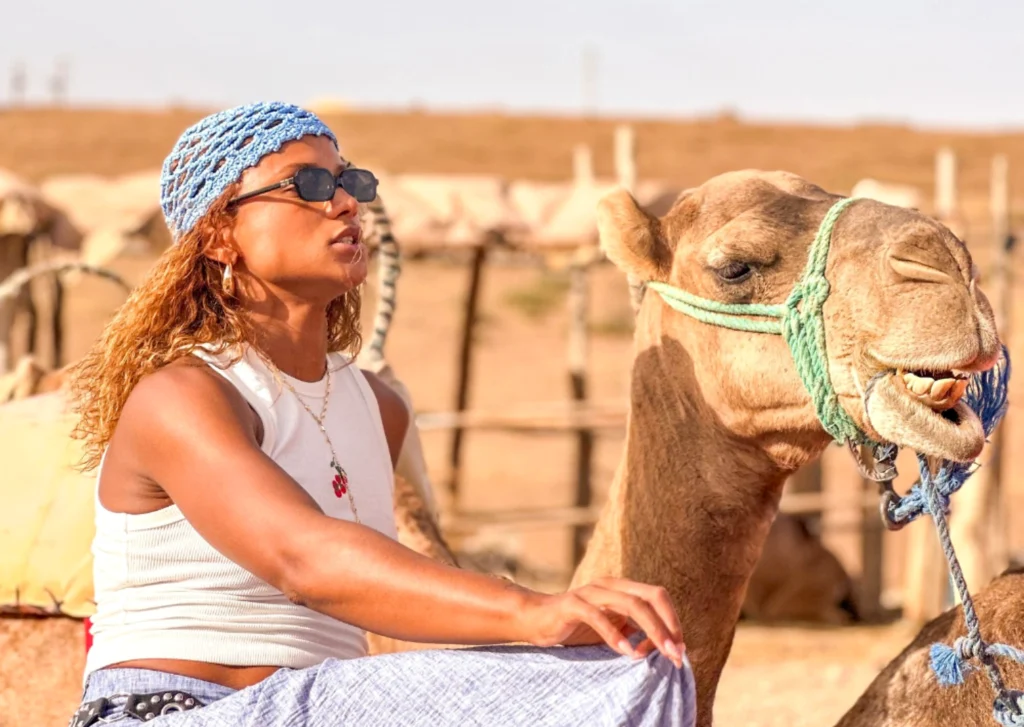
Agafay Camel Ride Photos: Natural Poses, Light and Respect
Camel ride photographs are among the images that draw visitors to Agafay Desert. A camel against the rocky hills is instantly recognisable, but a good picture should never come at the expense of the animal’s welfare, the guide’s instructions or a rider’s balance.
Whether you are using a phone or a camera, a few careful choices about light, composition and timing can make the photographs more useful. This guide covers photos as part of a booked experience; it does not suggest leaving an organised route or making animals perform for a shot.
Decide what photograph tells your story
Begin with three simple photographs: a wide view showing the camel and landscape, a closer shot highlighting the rider and the saddle detail, and an image of the surrounding rocky terrain. These frames work together as a small visual story. If every photo is tightly cropped on a face, it becomes hard to tell where the experience happened.
Agafay is a stony landscape, not a towering sand dune field. Keeping that character visible helps friends and future visitors understand what to expect.
Use light to describe the landscape
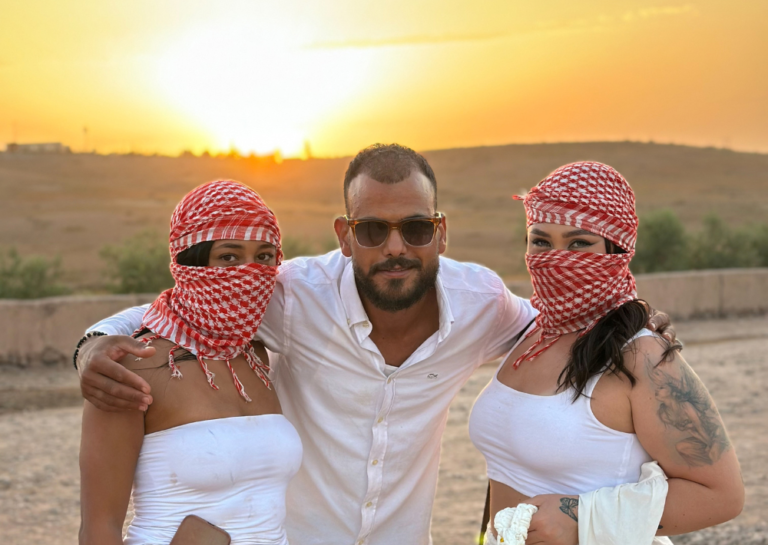
Bright light can be useful for clear detail, but it also makes people squint and creates deep shadows beneath hats. Softer, lower-angle light may give a calmer portrait. If your ride happens near sunset, watch for backlighting and avoid pointing a phone directly into the sun for every frame.
Timing is determined by the booked activity, not a photo wish list. Check the scheduled ride window if warm light is important to you. For general sunset photography, our sunset photo guide has complementary advice.
Photograph safely before mounting and after dismounting
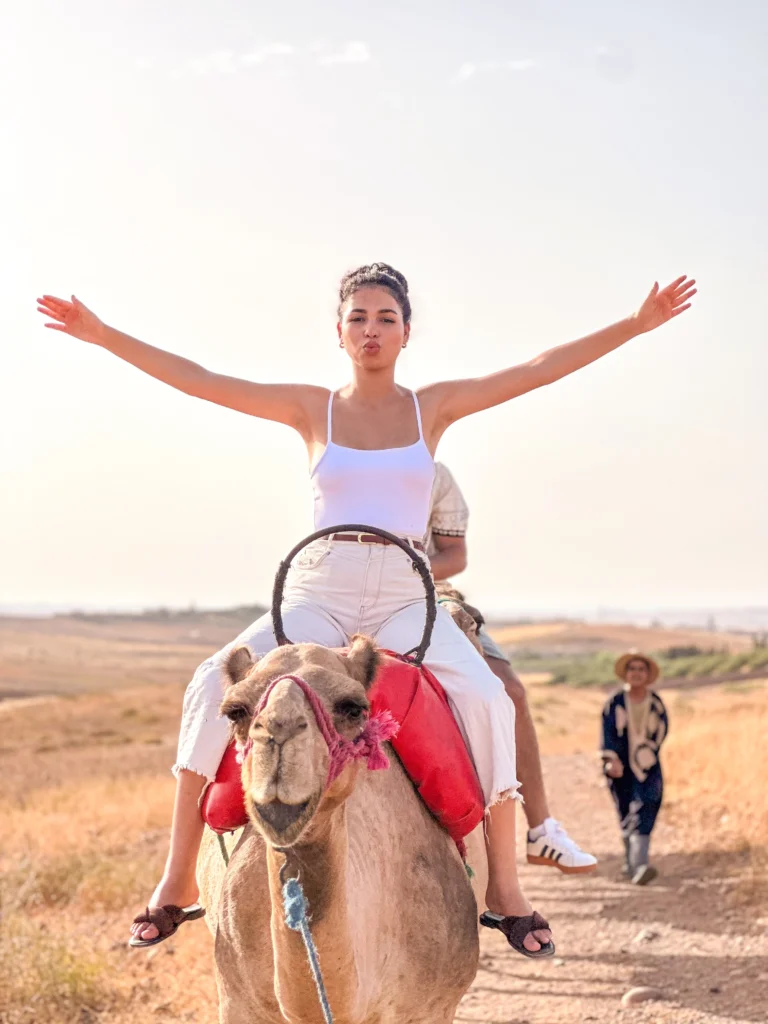
One of the best opportunities for a steady portrait may be while everyone is safely on the ground at an approved stopping point. Once mounted, keep your hands available for balance and follow the guide. Do not stand in the path of an animal, lean away from a moving camel or ask the guide to change a safe routine for a more dramatic composition.
Only use a camera or phone from the saddle when the guide says it is safe to do so; often it is better for a travelling companion to take the photograph. Never attempt a risky selfie while the camel is rising, sitting or moving.
Framing: show the animal, rider and space
Leave space ahead of the direction of travel rather than cropping tightly around the nose. Try both portrait orientation for a person-and-camel photograph and landscape orientation for the bigger setting. Keep the horizon reasonably level and watch that the animal’s legs are not cut off awkwardly by the bottom of the frame.
If you are photographing from a distance, a modest zoom can simplify the background. Avoid obstructing another group or going beyond the designated safe area to chase a cleaner shot.
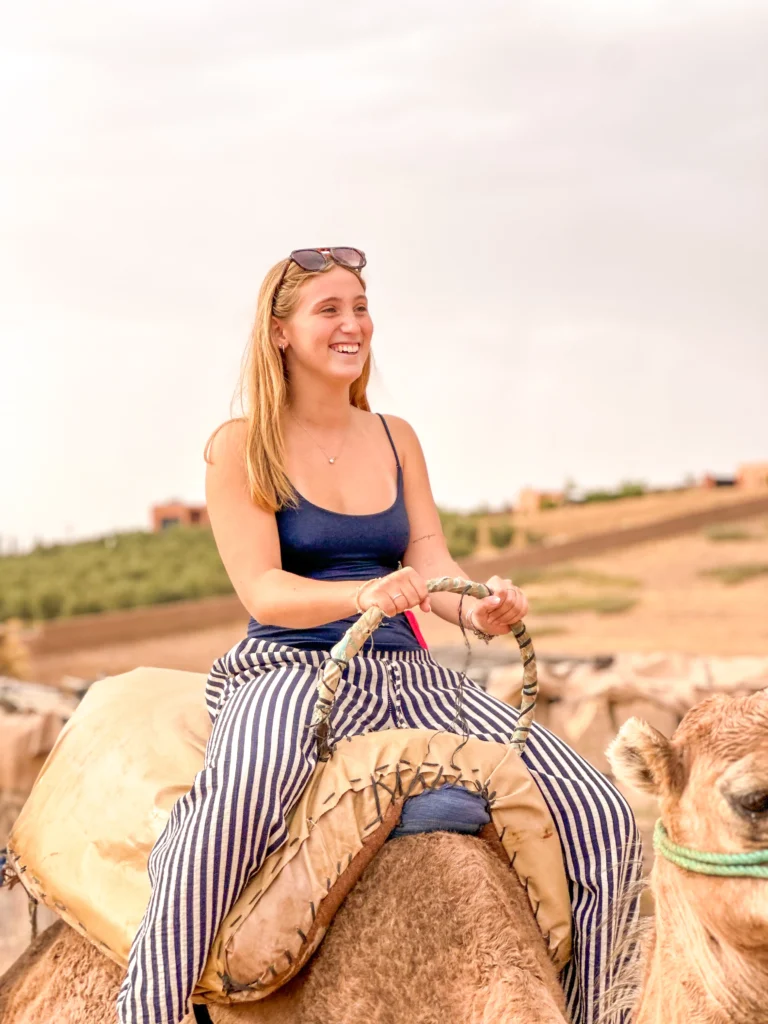
Respect animals, guides and other visitors
Follow instructions on approaching, touching and standing near camels. Do not feed them or use treats to prompt a pose unless staff explicitly direct it. If the animal seems unsettled, let the handler prioritise its needs. Animal welfare is more important than a photograph.
Ask guides and other guests for permission before publishing identifiable photos. Respect local residents and private property, and do not use a person’s likeness to imply that they endorse a business. For visitor conduct beyond photography, see our responsible tourism guide.
Phone settings that make a difference
Wipe dust from the lens, tap the subject to set focus and take a short sequence rather than one rushed image. Avoid digital zoom when it destroys detail. Hold the phone with both hands when stationary and use automatic exposure compensation to retain detail in a bright sky.
When sharing a photograph, write a specific caption that matches the scene. “Camel ride against the rocky Agafay hills near Marrakech” is more helpful than a generic claim about the Sahara. Accurate captions benefit both readers and image search.
Booking a camel experience without photo surprises
Oasis Sky lists camel-related activities and combined packages. Check the camel ride with dinner and show or browse all packages to compare the current options. Ask whether stops for photographs are possible, what ride duration means and whether transport is included.
For rider comfort and logistics, read our first-time camel ride guide. Prioritise a safe, respectful outing first; good photographs are a welcome part of it.
Agafay Camel Ride Photo FAQs
Can I take photos while riding a camel?
Only when your guide considers it safe. Keep your balance and hands available, and avoid taking photos during mounting, dismounting or unexpected movement.
When is the best light for Agafay camel ride photos?
Softer light can flatter portraits, but the best option depends on the scheduled ride and weather. Do not assume every camel experience takes place at sunset.
Can someone photograph me from the ground?
Ask your guide what is possible at approved stops. A companion on the ground may sometimes capture a steadier image than a rider holding a phone.
Should I bring a large camera or just a phone?
A phone can produce good results and is easier to carry. If bringing a camera, protect it from dust and follow the operator’s gear and safety rules.
May I pose beside a camel after the ride?
Only with the handler’s permission and guidance. Do not approach or position yourself beside an animal without instructions.
Are camel ride photo stops included in every booking?
No specific photo stop should be assumed. Ask the operator about the itinerary and safe opportunities to take pictures before booking.